Adeyemi Oshunrinade
September 3, 2023
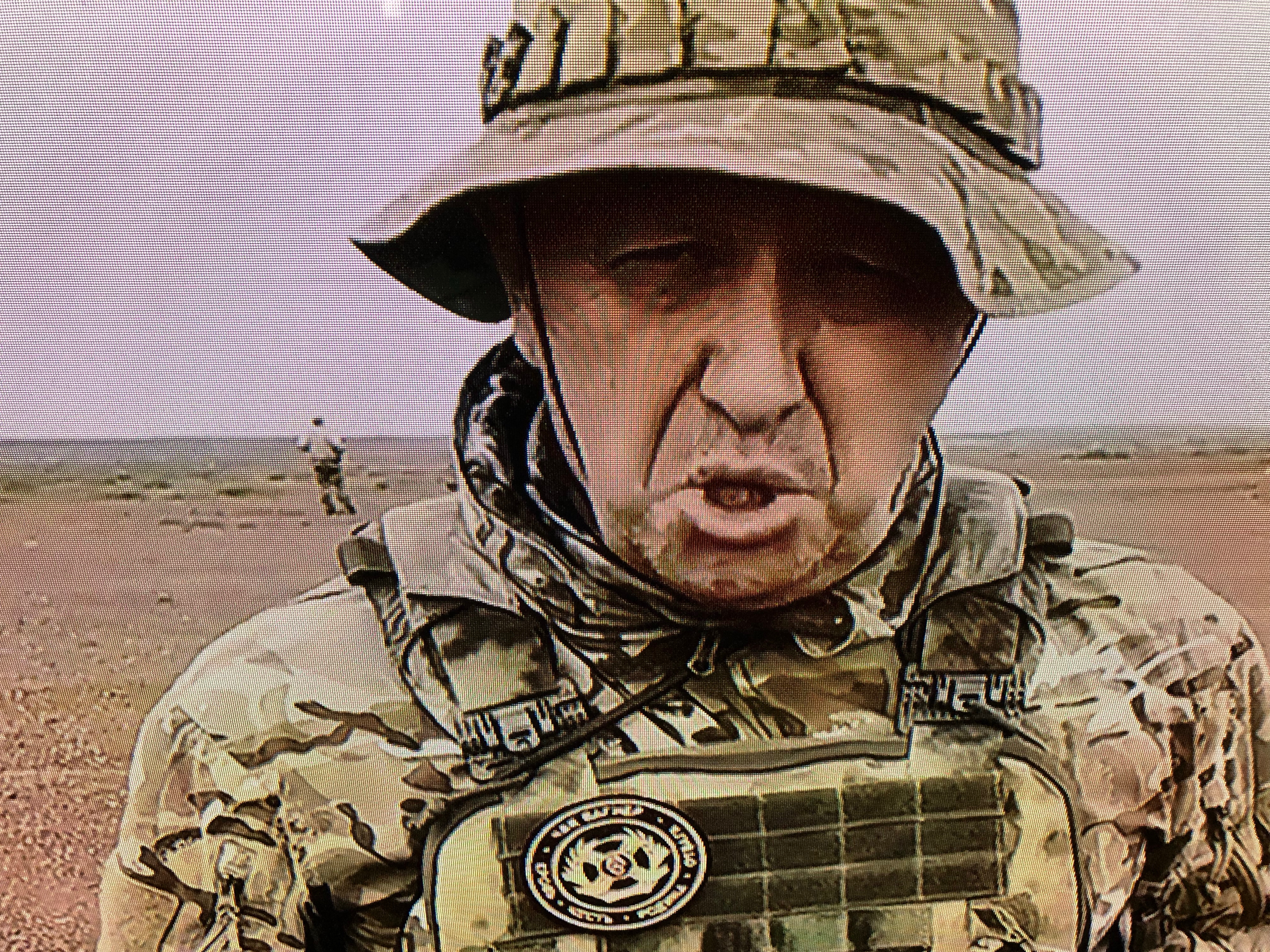
Those who understand Putin’s passion for the Soviet Union, are unsurprised the Russian leader invaded Ukraine. The recruitment of Yevgeny Prigozhin, leader and founder of the Wagner group who fought alongside Russian military in Ukraine, offered the Russian president opportunity for major gains at the early stages of the war, when it appeared the Russian military was unprepared, an embarrassment to Putin at the world stage.
Troubled by the military’s unsatisfactory performance, Prigozhin mounted opposition to its leadership. He openly criticized the Russian Defense Ministry for corruption and mishandling of war efforts in Ukraine. Eventually, he said the reasons given for the invasion were lies. The revelation was picked on by the press, this angered Putin and marked the beginning of rivalry between the Russian leader and Prigozhin. In June 2023, Prigozhin launched a rebellion against the Russian military leadership, Wagner forces took control of Rostov-On-Don and a major military command center for the war in Ukraine. From there, his forces advanced towards Moscow but the rebellion was called off following day at the intervention of the President of Belarus, Alexander Lukashenko. Prigozhin had his criminal charges dropped after agreeing to relocate his forces to Belarus.
Why Prigozhin chose to end the mutiny when he was so close to achieving a big change of leadership in Russia, remains a mystery for history to solve. Perhaps the biggest mistake of his career that cost him his life. On 23 August 2023, exactly two months after the rebellion, Prigozhin was killed in a plane he boarded with nine others after crashing in Tver Oblast, north of Moscow. Russian investigators have since concluded he was among the ten people killed. Before his demise, Prigozhin was labeled a thug who did many bad things but at the end, he could not defend himself against Putin despite his training as a fighter and head of one of the most brutal mercenary groups in the world.
Since his death, the Russian authority fervently denied any involvement, while Western sources have suggested his death was ordered by Putin, as punishment for the mutiny, which represented the biggest challenge to his leadership since he came to power in 1999. A review of the history of opposition deaths in Russia shows that those opposed to the Russian President are either killed or end up in prison without fair trial. The forms of attacks have varied, from underwear daubed with nerve agent, tea laced with poison or straight forward assassination by bullet if not thrown out through the windows of a high-rise building. CIA director Bill Burns had this to say during an annual security forum in Aspen, “Putin is someone who generally thinks that revenge is a dish best served cold.” In a 2018 documentary about the Russian leader, journalist Andrei Kondrashov, asked Putin if he was able to forgive people’s mistakes. “Yes,” Putin answered. “But not everything.” “What’s impossible for you to forgive?” the journalist asked. “Betrayal,” Putin said, emphatically.
Prigozhin was a walking dead from the moment the mutiny failed until his last days in fact, experts on Russia and global affairs are surprised it took two months before he finally met his end. However, to think his death was an unfortunate crash as the Russian leadership wants the world to believe, makes mockery of global intelligence and understanding of the mode of operation of the Russian leader. When asked to comment on the death of the Wagner leader, here is what Putin said: “I have known Prigozhin for a long time from the beginning of the 1990s, he was a man with a complex fate- sometimes he made mistakes; and sometimes he got the result he wanted for himself and in response to my requests for a common cause…”
The timing of Prigozhin’s death can be linked to the events in Niger and the neighboring countries of Mali, Central African Republic (CAR) and Burkina Faso. Not long after a coup d’état in which the country’ presidential guard detained President Mohamed Bazoum and General Abdourahamane Tchiani proclaimed himself the leader of a military junta, the coup leaders fearing ECOWAS’ involvement, asked for help from Wagner. Though, it remains unclear if Wagner has maintained a presence in Niger, the mercenary group is believed to have thousands of fighters in CAR and Mali, where it has lucrative business and also help bolster Russia’s diplomatic and economic relations.
With the war in Ukraine ongoing, Putin knew the implications of not establishing a presence in Africa, he has become a pariah sidelined by the U.S. and the West and to consolidate his power and influence, he needed Prigozhin to withdraw Wagner from Ukraine and resettle the mercenaries in Africa. After the failed mutiny, Wagner and Prigozhin became a threat to his leadership. Killing Prigozhin immediately the rebellion failed, while Wagner remains within Europe would be a risk not worth taking. To eliminate the risk, Putin dropped charges against Prigozhin to establish his presence in Africa, while he plots how to eliminate the mercenary leader who had “betrayed” him. No surprise the entire command of Wagner was killed along with Prigozhin. After all, a body without the head is incapacitated and useless; Putin intends to change the leadership, reorganize Wagner and bring it under control of the Russian military. Removing the voice of Prigozhin was the best route to achieving it and with instability in Niger, he craves for a presence in the region to deter the U.S. and French hegemony.
With the biggest threat Putin faced since taking hold of power gone, the questions are; what would become of Wagner and the mercenaries left by Prigozhin? Does ECOWAS headed by Nigeria have any military role in Niger? And will the United States or France invade the country since the military has refused to reinstate Bazoum as demanded by Western powers?
It is unclear if Putin has enough support to take total control of Wagner. Russians mourning the death of Prigozhin, have set up makeshift memorials in nearly two dozen cities across Russia and occupied Ukraine, an indication of Prigozhin’s lingering popularity and a possible challenge for the Russian President. With many in Russia’s elite convinced that Prigozhin’s death was a state assassination ordered by Putin, the task of managing potential anger among his supporters, remains a difficult task for the Kremlin. Putin may have overplayed his ability to choose a new leader for Wagner without consideration for a possible revolt by Prigozhin’s cult of loyalists. There is the likelihood of a fractured Wagner with one part controlled by Putin, while the other made of military activists supporters of Wagner PMC and Wagner veterans, becomes a radical movement and opposition to Putin’s rule. Prigozhin inspired loyalty in his followers and these are people who believe he was a hero of Russia. Writing in the Washington Post, Robyn Dixon cited one Wagner fighter from St Petersburg, Pavel Shabrin, who penned a poem about Prigozhin as follows:
“He was with us at the front: in the trenches, in dugouts. He knew our problems and rejoiced with us. He slept in tents and ate porridge from a knife and put candles for the dead in front of the icons.”
As Russia continues to maintain its influence in Niger, the series of military coups in West Africa have led to fears of broader regional conflict with some countries in the region worried they might be the next for a military takeover. As a result, the major political bloc in the region is threatening intervention in Niger unless the elected government of Bazoum is restored. The Economic Community of West African States (ECOWAS) recently said it was prepared for military intervention and that it has decided on a “D-Day” for operation in Niger. The bloc has also rejected a junta proposal to return to democracy in three years. Meanwhile, Mali, Burkina Faso and Guinea all former French colonies in the Sahel- have indicated they may side with the military leadership in Niger in the event of a war or incursion by ECOWAS. These are countries that have had their own military coups and are now vowing to support the military in Niger.
The situation is a test of the political will and organizational capability of ECOWAS. The organization is mired in deep division among its members, it has been criticized in the past for inconsistencies in interventions. Though the ECOWAS got involved in Gambia in 2017, it failed to intervene when Mali, Guinea and Burkina Faso had coups. Instead, it suspended memberships and imposed sanctions on the military governments, while the body failed to correct corruption among the member states. Cases of poor leaderships, mismanagement of funds and incompetence of elected officials are pervasive throughout Africa, while ECOWAS remains a toothless bull. Fair to say the recent takeover by the junta in Niger is a consequence of its misgivings. Power hungry officers seized on the support of citizens drenched in poverty, caused by corruption of elected leaders. And Just like ECOWAS, the African Union (AU) failed in its duties to Africa. In fact, as at the time of writing, a group of military officers said they had seized power in the oil rich central African nation of Gabon, perhaps another coup.
Any military intervention by ECOWAS or Nigeria, is bound to fail. Nigeria should not be fighting a war in a neighboring country, while incapable of ending terrorism and insecurity within her own borders. Majority of the local population in Niger support the military so, why would Nigeria or ECOWAS consider an armed invasion to restore a democratic government rejected by Nigeriens? If the invasion proceeds as planned, the northern part of Nigeria would be destabilized and become a corridor for insurgency and banditry. Also, if confirmed that Wagner has set up shop in Niger, such a development would neutralize any move by ECOWAS to meddle in the internal conflict.
The United States and France will not fight a war in Niger as some believe, but, both nations will take actions to protect their interests. The U.S. presence in Niger dates back to 2002, when the George W. Bush administration was winding up its “Global War on Terror.” The purpose at the time was for the U.S. to wage a preemptive war to disrupt potential terrorist attacks likely to emanate from the region. The U.S. spent about $110 million to build the security base near Agadez and poured at least $500 million more of security aid into the country since 2012. To think the U.S. government will abandon its efforts in the country is unthinkable as long as the risks of terrorism exists. The French will do the same if compelling interests are at risk of being forfeited. However, the presence of Russia in Niger will make any move by both countries to help reinstate the democratic government difficult. Nigeriens have pledged their support for the military who now has the backing of Russia. The result of a clash between the three powers in Niger, would be reminiscent of Syria… President Assad remains leader in Syria because of Russia’s involvement in the war. Despite the ripple effects of the Arab Uprising in Tunisia, Egypt and Libya, Assad emerged unscathed due to Russia’s support. Likewise, the junta in Niger may remain in power as long as it has the backing of Russia.
As a way forward, African leaders must heed the cries of their citizens, the current wave of military takeovers in the Sahel region begs for attention as they are the results of years of poor leadership, corruption and mismanagement which left most people in poverty. It is time to reevaluate Western influence in Africa; those elected to office must exercise competence in the management of the resources which in most cases end up in foreign hands. Military rule is of no good to Africa but, to prevent such alternative, those democratically elected must serve with integrity devoid of corruption. They should not remain in power for too long in violation of their mandates. The Sahel region must be wary of a move towards Russia, the presence of Wagner in the region means total submission to Russia’ influence and possible isolation of the region by the West- a recipe for economic devastation in the Sahel.
ECOWAS and the AU are failing in their purpose for Africa. Both organizations need to show concern and employ administrative intervention whenever a member state is deficient in its duties to the country. They should not wait for the system to collapse and must be consistent in their military response to chaos.
As for Russia, only time will tell how long Putin maintains his support for junta in the Sahel. With Prigozhin gone, the Russian leader may have eliminated his biggest threat but it remains how he intends to take total control of Wagner. The oligarchs are unhappy due to sanctions and Russian generals are embarrassed of being portrayed as weak. With that in mind, it is unclear how Putin plans to keep a centralized grip on Ukraine and his mission in Africa without a cohesive Wagner, likely to avenge its leader’s demise.
Adeyemi Oshunrinade is the author of “Medical Malpractice in Health Law.” He also wrote “Wills Law and Contests,” “Constitutional Law-First Amendment” and other publications available on Amazon. Follow on Twitter @san0670.
Categories: Current Affair, Foreign Affairs, Uncategorized, War and Politics
 Gettysburg Institute Post
Leave a comment