Adeyemi Oshunrinade
July 8, 2024
With its recent ruling conferring immunity on Presidents, the U.S. Supreme Court, has set a bad precedent. The Court willingly removed the guardrail that kept the country from corruption and abuse of power by giving a former President, and all future ones the license to do what would have landed President Nixon in Prison.
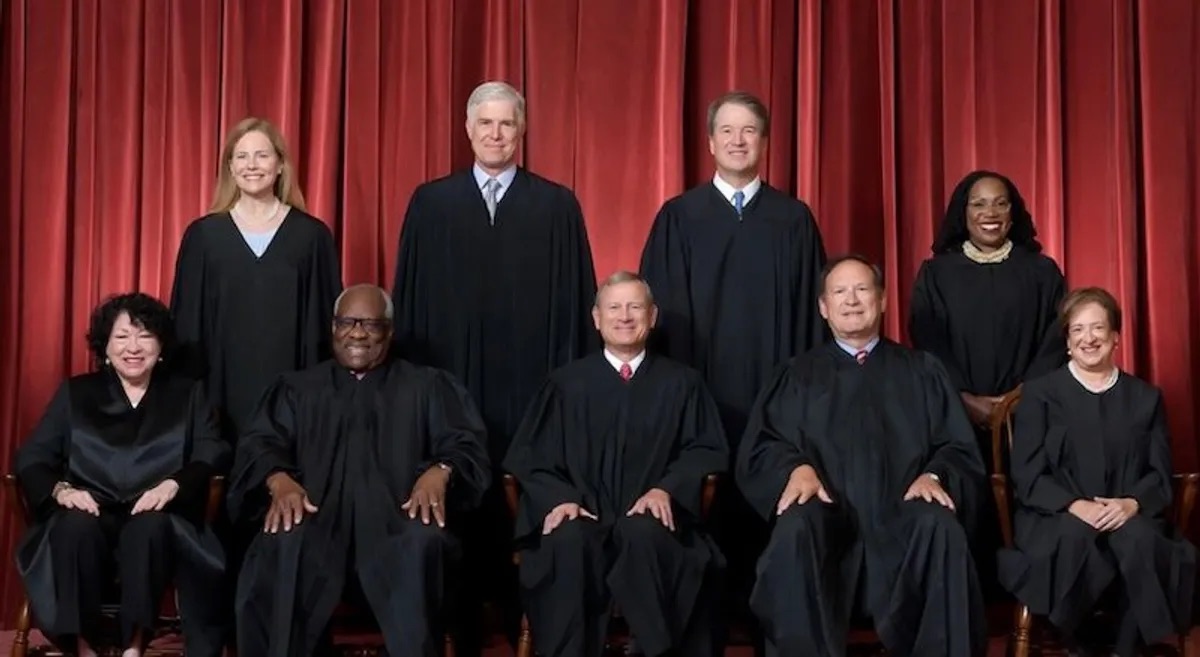
The notion that the court is functioning as an arm of the political establishment is not an overstatement. The 6-3 ruling divided along party lines shows the conservative Justices, subscribe to making it impossible to prosecute a President, while the timing of the court’s opinion is a proof the decision’s design is to help former President Trump evade justice. In a way, the Court is saying a president is above the law as long as his actions are within the scope of his “official duties.”
Historically, American Presidents have inferred immunity from prosecution when they act on behalf of the country. A good example of that is in foreign policy, where it is presumed that the President has qualified immunity when he takes actions or gives orders in the interest of the nation. If a U.S. President orders the killing of a terrorist on a foreign soil, he is immune from prosecution for acting in the interest of security and the nation. When President Harry Truman ordered two atomic bombs dropped on Hiroshima and Nagasaki, he acted in his official capacity as President in response to the attack on Pearl Harbor. Likewise, when the American President orders the military to war, he is immune from prosecution if the war is justified and done in the interests of the United States.
What sets recent ruling by the Supreme Court apart is how the court now extends the reach of presidential immunity to domestic affairs, such that the American President is given more power than envisioned by the founders, making it possible for a future rogue leader to abuse power and claim immunity from prosecution. Worse is the fact that the highest Court did not issue its opinion in the interests of protecting presidents but instead, it was targeted with one candidate in mind – Donald Trump. However, the decision was disguised as far reaching to future presidents, while it remains in doubt that any Democratic President will need such immunity or abuse his power the way Trump did, while in office.
There are two key paragraphs in the opinion that clearly exposed the intent of the conservative justices: (1) when Trump pressured the justice department to investigate election fraud, one of the key indictments by Special Counsel Jack Smith, the court says that part of the charge, is immune from prosecution; (2) when Trump pressured Vice President Mike Pence to refuse certification of Biden’s win, that too the court ruled is immune as it falls within Trump’s official duties as President. it remains unseen how an attempt to subvert the will of the people, falls within official duty, in the face of clear and convincing evidence that Biden won the 2020 election.
Now that the court has handed down what it concluded should be a path to how presidential powers should be viewed, there are indications that this ruling will encounter future obstacles likely to threaten its lifespan as a precedent that survives generations. Just like the Dred Scott’s ruling met its end at a point in history and Plessy v. Ferguson was overturned in Brown v. Board of Education, the immunity ruling is also destined for reversal in the nearest future and here is how:
The Supremacy Clause of the Constitution of the United States establishes that the Constitution, federal laws made pursuant to it, and treaties made under its authority, constitute the “supreme Law of the Land”, and thus take priority over any conflicting state laws. On the same note, while decisions of the Supreme Court on constitutional issues are final, the United States Congress has the power of oversight on the court such that, Congress through constitutional amendments or by making new laws can override a bad ruling by the court. There is possibility that a future Congress with a majority in both House and the Senate will act to review the immunity decision.
There is no indication that the egregious decision by the court envisioned “Transferred Immunity.” The court may have overlooked the fact that the American President does not act alone. When a President gives an order, he needs his staff and cabinet members to enforce and execute such order. In a situation where an order by the President is in violation of the law or criminal in nature, a staff or cabinet member may refuse to implement it knowing that, while the President is immune, his staffs and associates are not and therefore subject to prosecution. Even when the President promises a pardon, such pardons have no reach when the acts extend to State jurisdiction. In other words, the immunity may become worthless when the intent of its usefulness is not realized.
A future Supreme Court with a different makeup will overturn the immunity decision. If Trump loses in November and Democrats take both the House and Senate, the likelihood of two justices Alito and Thomas facing serious Congressional investigation becomes high. Both are deemed corrupt and while they have lifetime appointment on the court, they have become so unpopular with the American people and are considered the ones likely to leave the court if pressure mounts. However, a win for Trump may delay overturning the decision if all possibilities fail.
With the purpose of the immunity clear as a kind gesture to the candidate of choice – Trump, the court’s decision to extend its powers to all Presidents, creates fear of an imperial leadership, a factor the conservative justices seem willfully blind to. The move shields lawbreaking, in a world where a president can use the justice department to go after his enemies and not be seen as breaking the law. A landmark ruling that impacts not only a former President, but future ones will reshape American democracy and, while the justices believe all arguments on possible abuse of power to be hypotheticals, there will come a time when a rogue President seizes on the extensive power to do bad things and hide behind the shield of immunity. It is doubtful that Americans will settle for a rogue leader. According to Thomas Jefferson, “when tyranny becomes law, rebellion becomes duty.” A powerful and tyrannical leader will generate protests strong enough to make the court reverse its immunity decision.
In essence, the Court’s move that a President is immune when executing his core constitutional powers and enjoys the presumption of immunity when performing official acts, makes mockery of American democracy and the founders intentions that the nation is not a monarchy. So far, the court has failed to define what official and unofficial acts are but instead defer to the lower courts to figure things out. Though, it is unknown if a future President will abuse his power, the ruling opens the possibility that one could be emboldened to do so. The level of criminal behavior linked to former President Trump is a textbook example of what may occur should he return to office. The partisan nature of the Supreme Court’s ruling opens up the possibility of rogue presidents engaging in abuse of power and unconstitutional conduct, unlawful beyond comprehension. By saying a President is no longer reviewable by the criminal process, the court is undermining the principle of checks and balances such that, In fear for American democracy, the immunity ruling must be overruled at a point in history.
Adeyemi Oshunrinade is the author of “Medical Malpractice in Health Law.” He also wrote “Wills Law and Contests,” “Constitutional Law-First Amendment” and other publications available at Harvard books Barnes & Noble and Amazon. Follow on Twitter @san0670.
Categories: Current Affair, LAW, Politics, Uncategorized
 Gettysburg Institute Post
Leave a comment